Luigi Mazzone: When Fencing Becomes a Tool for Inclusion
A Champion’s Journey Into Leadership
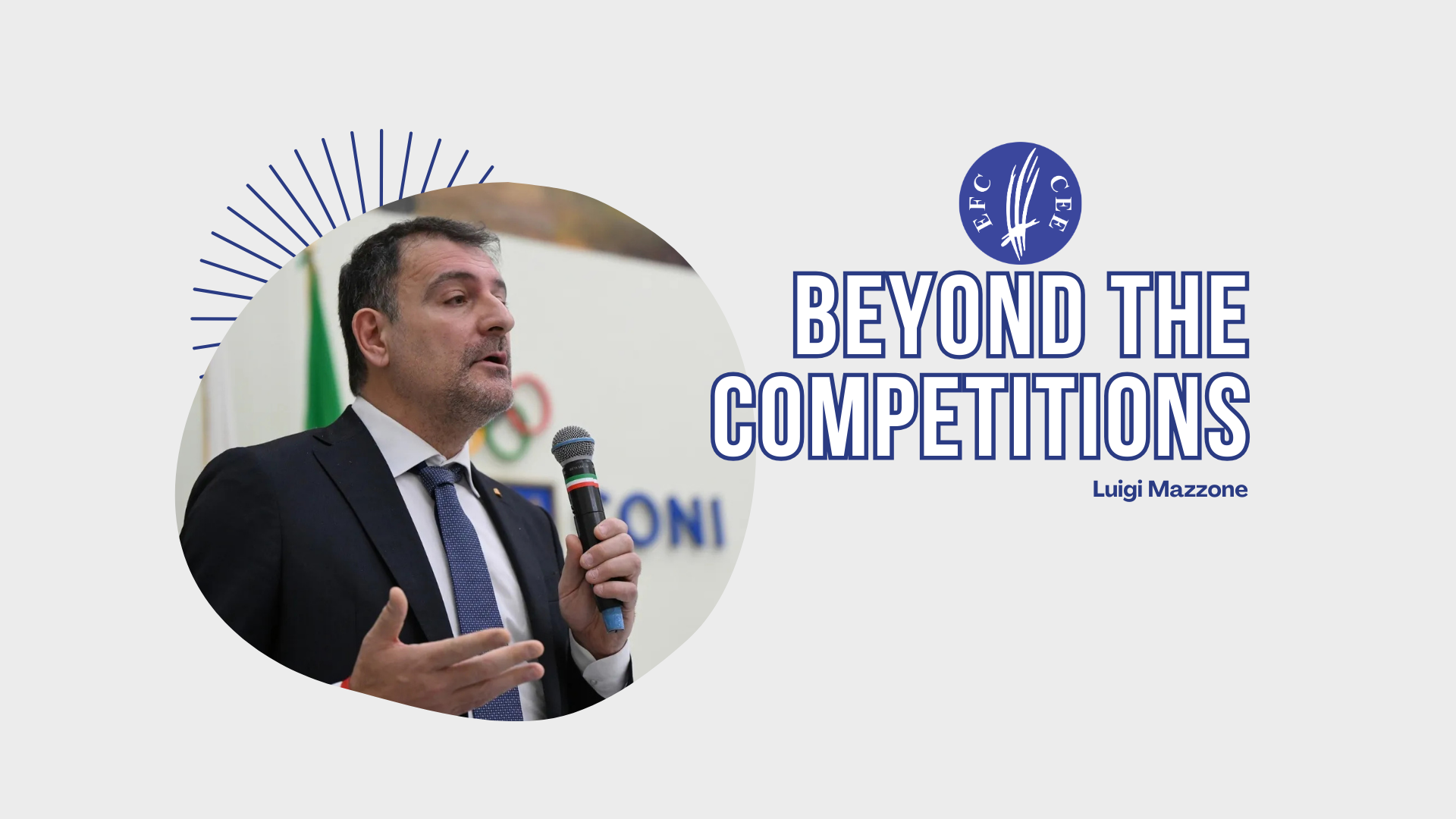
Luigi Mazzone’s path in fencing began long before boardrooms and presidential responsibilities. As a young épéeist, he reached the top nationally and internationally—while simultaneously pursuing medicine. “My time as an athlete was certainly memorable and formative: the Italian title, a World Cup podium,” he recalls. Yet what stayed with him most was not only the result, but the daily discipline required to earn it.
Studying medicine while training at a high level demanded maturity early on. “Balancing fencing and studying was a real challenge as a teenager and young adult,” Mazzone says. That period shaped the values that still guide him today. “Fencing taught me adaptability and a belief in meritocracy—that true success comes from hard work and dedication,”he adds, pointing to lessons that carried directly into his professional life.
Now, as President of the Italian Fencing Federation, he sees leadership through the same lens: service, responsibility, and the real needs of athletes. “I always try to put myself in the athlete’s shoes, thinking about what I needed when I was on the strip,” he explains. For him, modern governance must go beyond medals and rankings: “Accountability isn’t just about results, but also about creating environments where athletes feel supported, included, safely challenged, and understood.”
Why This Story Matters for European Fencing
In European fencing, performance and tradition are pillars—but so are education, inclusion, and the long-term health of our communities. Mazzone’s profile is unique because his work connects these worlds in a concrete way: elite sport, institutional leadership, and child neuropsychiatry.
From his medical perspective, sport is not only physical activity—it can be a structured developmental space, especially for children who experience the world differently. “Sport in general promotes physical and mental wellbeing, especially during childhood,” he says. “As a child psychiatrist I strongly believe in the importance of creating recreational, inclusive spaces for children with neurodevelopmental disorders.”
He is precise about the role sport should play. It is not a replacement for clinical care, but it can become a powerful support when approached correctly. “These activities are not strictly therapeutic,” Mazzone underlines, “but when combined with evidence-based interventions they can significantly improve the quality of life for children and their families.”
Fencing and Autism: Structure That Creates Possibility
Among many sports, fencing offers something particularly valuable for children with neurodevelopmental disorders, including autism: predictable interaction. The format is clear, the rules are defined, and the social contact is present—but controlled.
“Fencing is particularly suitable for children with neurodevelopmental disorders, especially autistic people, because it combines structure, clear rules, and controlled social interaction,” Mazzone explains. He describes the bout in very practical terms: “Your opponent is two feet away, and you must interpret, control, and predict every move to avoid being hit.”
That combination—structure plus real interaction—becomes a training ground for key cognitive skills. “It’s excellent training for someone with autism to develop metacognitive skills,” he says, highlighting that fencing does not only teach movements, but also thinking patterns. It also supports sensory organisation and attention in ways that many children respond to positively. “It supports sensory processing through visual and auditory cues,” Mazzone notes, “which positively reinforce the activity.”
What Children Can Develop on the Piste
Inclusion is not only about participation; it is about development. In Mazzone’s experience, fencing can help children build core skills that matter far beyond the gym. “Fencing can enhance executive functions, attention control, emotional regulation, and adaptive flexibility,” he explains.
In practice, progress often becomes visible in small but meaningful moments: anticipating rather than reacting, staying present under stress, managing frustration instead of shutting down. “We’ve seen children learn to anticipate an opponent’s movements, manage frustration, develop social reciprocity, and gain confidence in interacting with others,”Mazzone says—skills that naturally strengthen social inclusion.
He also emphasises why fencing can feel safer than many traditional sports environments. Routine, distance, and rules create a frame where exploration becomes possible. “Elements like routine, clear rules, controlled distance, and structured interaction allow children to explore relationships safely,” he explains, supporting emotional regulation while encouraging autonomy, adaptive functioning, and social skills.
Why Traditional Sports Can Be Difficult
Mazzone is direct about what many families experience: not every sports environment is naturally accessible. For children with autism, certain settings can create stress rather than growth. “In traditional sports, children with autism often face overstimulation, unclear rules, or unstructured social demands,” he says. When the environment overwhelms the child, the outcome can be predictable: “These factors can lead to anxiety, withdrawal, or disruptive behaviour.”
This is precisely where fencing—when delivered thoughtfully—can offer a different experience: a predictable structure that still includes real interaction, step by step.
Inclusion Starts With Adapting the Environment
One of Mazzone’s strongest messages is that inclusion is not achieved by asking the child to fit in. It is achieved when clubs and coaches are prepared to adapt. “Inclusion in fencing, as in other sports, requires adapting the environment to each child’s individual needs,” he says. That adaptation includes communication style, training rhythm, space management, and the ability to anticipate moments of stress.
For this reason, coaching education becomes essential. “Coaches need to be trained to understand the characteristics of autism and other neurodevelopmental disorders,” Mazzone explains, “adjusting both communication and the environment, and being able to anticipate and manage challenging behaviors.” He adds a practical point that many clubs underestimate: “The environment should be prepared in advance to welcome individuals with autism or neurodevelopmental disorders.”
This cannot sit only on the shoulders of individual coaches; institutions must support it. “Federations should be equipped to provide training,” Mazzone stresses. He points to a concrete example from Italy: the Italian Fencing Federation organised a dedicated webinar last October on structuring a fencing gym and approaching an athlete with autism, drawing more than 100 participants, including many fencing coaches.
Performance and Responsibility Must Grow Together
For European fencing, Mazzone’s perspective is clear: excellence and inclusion are not competing agendas. They should be part of the same vision. “Institutions must recognize that inclusion, well-being, and skills development are as important as athletic results,” he says.
And he offers a line that cuts to the core of modern sport governance: “Winning medals at World Championships and Olympics isn’t enough.” For him, a sport that stays exclusive misses its own future. “A sport that isn’t inclusive has missed a significant opportunity for growth,” Mazzone says, calling for programmes that connect competitive ambition with meaningful social impact.
A Reassuring Message to Parents—and a Call to Clubs
Mazzone understands why some parents hesitate. “Fencing can sometimes seem intimidating… because it is perceived as a ‘duel’ and involves the use of a weapon,” he acknowledges. Yet he invites families to look beyond the stereotype and focus on what fencing can become with the right guidance: “With proper guidance and training, it can become a supportive environment that promotes wellbeing on multiple levels.”
To clubs and coaches across Europe, his message is equally clear and forward-looking. “Fencing has the potential to transform lives beyond competitions and medals,” Mazzone says. He encourages the community to take inclusion seriously, not as a slogan but as a shared standard: “Embrace inclusive practices, collaborate on standardized educational initiatives, and recognize that the true legacy of our sport lies not in podiums alone, but in the opportunities it creates for all participants.”