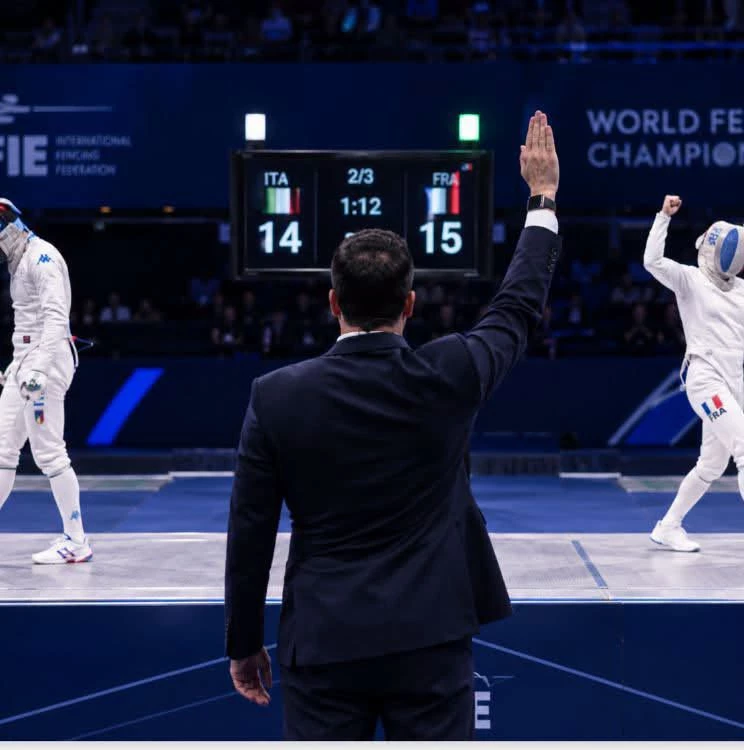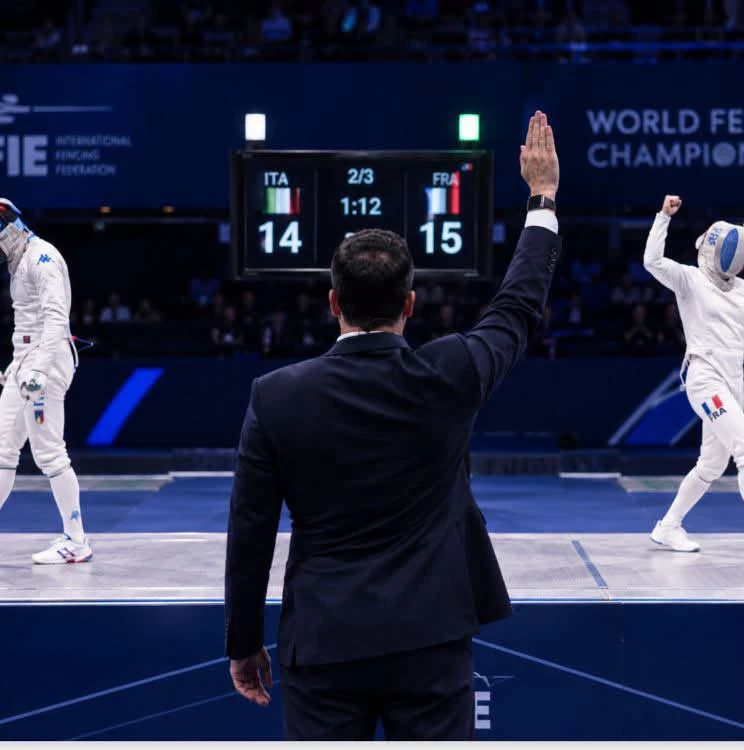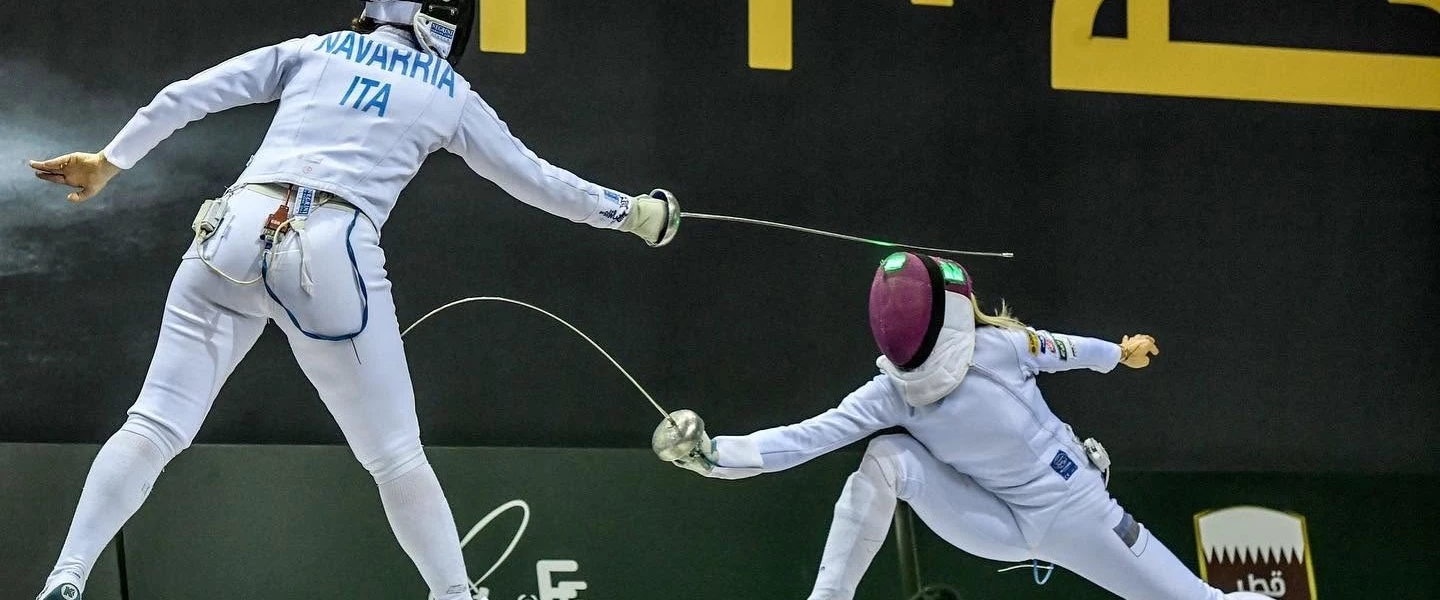
Across the continent, fencers are returning to training with new goals, renewed energy and another season of competitions ahead. For some athletes, the coming months will bring their first international appearances. For others, the focus will be on rankings, qualification, national team selection or major championship ambitions.
The 2026/2027 European season gets underway on 12 September with the U14 European Circuit in Split, Croatia, where young épée fencers will take the first competitive step of the new season.
Taking the Stage
Many of you may already know that I am Erika Kirpu, one of the people behind some of the articles you read on the EFC website. Usually, I stay on the other side of the story — writing about competitions, athletes and the European fencing community.
This time, I decided to take the stage myself. Not as a journalist, but as an Olympic Champion and mental coach working with fencers, with one simple intention: to share a few thoughts that may help motivate our readers as a new season begins.
For me, the beginning of a fencing season is an important moment not only to define ambitions, but also to reflect on mental preparation, pressure and the habits that can support performance throughout the year. So before the first competitions begin, I would like to invite athletes to look beyond the calendar and the rankings for a moment — and think about the mindset they want to carry with them into the season ahead.
Start With Ambition
For me, the beginning of a fencing season is one of the best moments to reflect not only on the goals ahead, but also on what may stand between us and those goals. Rankings, medals, qualification and selection can all provide direction, but in my approach to fencing mental coaching, setting the goal is only the first step.
The next question is just as important: what does an athlete need to develop in order to reach it? Sometimes the answer is technical or physical. Sometimes it is mental — managing pressure, recovering after mistakes, staying focused under stress or learning not to compare progress constantly with other athletes.
Through my work as a mental coach for fencers, I encourage athletes to use the beginning of the season not only to decide what they want to achieve, but also to identify the mental skills that may help them get there.
Focus on What You Can Control
One of the central ideas in my mental coaching approach is to separate what an athlete can control from what they cannot. A fencer cannot fully control the draw, the opponent, ranking movements, selection decisions or every situation that may happen during a competition. What can be influenced is preparation, effort, concentration, recovery, attitude and the response to difficult moments. For me, this is one of the foundations of mental preparation in fencing.
At the beginning of the season, athletes can use this distinction to identify the areas they want to develop and plan the actions and routines that will support them. This may include a more consistent warm-up, recovery habits, mental preparation before competitions or routines for refocusing after mistakes.
Once the goal and plan are in place, the focus needs to shift to the process. Athletes cannot control every result, but they can control how they prepare, how they respond and whether they continue to follow the actions that support their development. This becomes especially important when the initial excitement of September fades and motivation becomes less automatic.
Progress Is Bigger Than the Ranking
Another important part of fencing mental coaching is learning to evaluate progress beyond results alone. Improvement can appear in many forms before it becomes visible in the final ranking: better tactical decisions, stronger emotional control, greater confidence, faster recovery after mistakes or more consistency in training. These changes matter.
Every athlete has a different timeline, and constant comparison can easily take attention away from personal development. A more useful question is not always who is ahead, but whether you are becoming more complete, more aware and more capable of managing difficult moments than you were before.
One result does not define an athlete, and one difficult competition does not define a season. Results can instead be used as information: what worked, what changed under pressure and what still needs more attention.
Make the Season Yours
As the 2026/2027 season begins, my message to young fencers is to be ambitious without becoming controlled by the result. Goals are important because they create direction and energy, but a season is built through much smaller things: daily work, discipline, reactions to setbacks and the ability to keep learning when progress is not immediately visible.
There will be victories, difficult competitions, unexpected opportunities and moments when motivation changes, and all of them can become part of development.
For me, mental strength in fencing is not about always feeling confident or motivated. It is about developing the tools to continue working, adapting and competing even when the season does not follow the original plan.
As Europe’s fencers return to the piste, the challenge is therefore not only to chase results, but also to become stronger through the process.
Set the goal. Stay connected to the work. Learn from what happens next.
And make the season yours.